Things are always changing, its what drives success. However, change can be difficult to cope with.
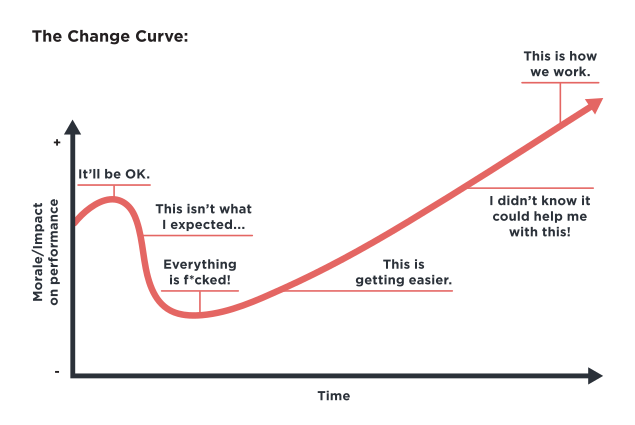
A good place to start in understanding change is to think about The Change Curve.
As we go through time from left to right, we go through different emotions which link to our performance.
They may be in shock or convinced there won’t be any change.
They carry on, assuming things are going to be fine.
Things aren’t going as expected. They may have feelings of anger, frustration, resentment or fear and is looking for someone or something to blame.
Work and performance can really suffer at this stage. This is a really unpleasant stage for people who are being affected by the change in this way.
However, it is always darkest before dawn and this point is also associated with Stage 3.
They stick with it, a turning point is reached.
They start to accept what’s happening.
“This might just work” or “it’s getting easier” or “we still need to learn and experiment until…”.
We commit to the new way of doing things.
It’s starting to become second nature and people can start to see the benefits to the team and the organisation.
What was once new is now just the way things are done.
Think about a big change you are going through or have been through recently: